Many homeowners still have older fuse boards installed in their property without realising how much electrical safety standards have changed over the years.
If your property still has an older fuse box, you may be wondering:
Do I need to replace it?
Is it still safe?
What exactly is a consumer unit?
Understanding the difference between an old fuse board and a modern consumer unit can help you decide whether an upgrade is worth considering.
What Is an Old Fuse Board?
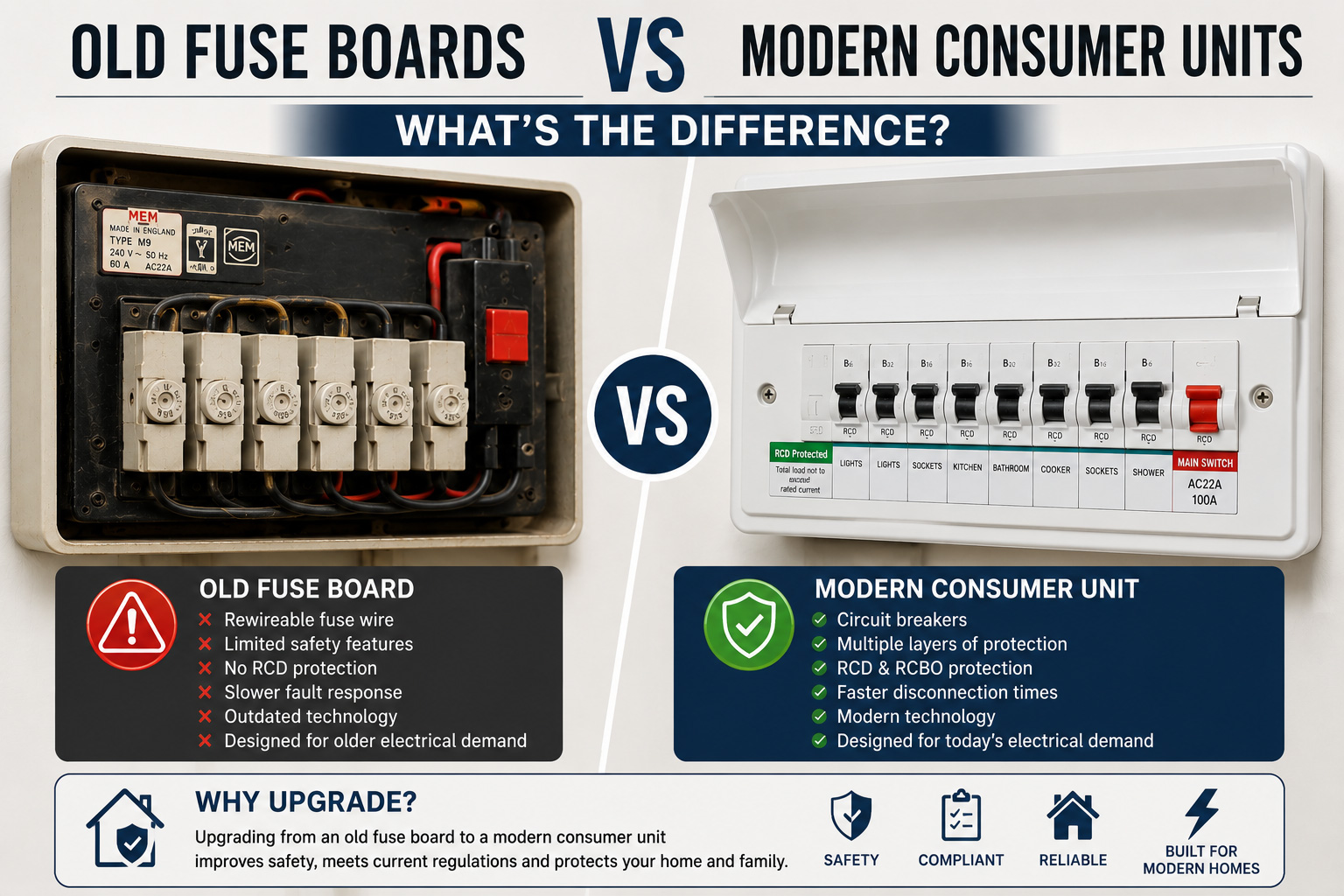
Older fuse boards were designed to protect electrical circuits using replaceable wire fuses or older-style breakers.
These systems were common in properties built several decades ago and often include:
- Rewireable fuse wire
- Limited circuit protection
- No RCD protection
- Older switchgear components
- Reduced protection against electrical faults
Many older fuse boards still function, but they were not designed for the electrical demands of modern homes.
Older properties using multiple appliances, home offices, EV chargers, or high electrical demand often place far greater pressure on outdated systems.
What Is a Modern Consumer Unit?
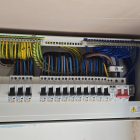
A modern consumer unit (sometimes called a fuse box) is designed to provide significantly improved electrical protection.
Modern consumer units typically include:
- RCD protection
- RCBO protection
- Circuit breakers
- Surge protection options
- Improved fault detection
These systems are designed to disconnect power quickly when faults are detected, reducing the risk of:
- Electrical fires
- Electric shocks
- Overloaded circuits
- Fault damage
👉 Learn more about our consumer unit upgrades in East Sussex
Old Fuse Board vs Consumer Unit: Key Differences
| Older Fuse Boards | Modern Consumer Units |
|---|---|
| Rewireable fuse wire | Circuit breakers |
| Limited safety features | Multiple safety layers |
| No RCD protection | Integrated RCD protection |
| Slower fault response | Faster disconnection times |
| Older technology | Designed for modern demand |
The biggest difference is simple:
Modern consumer units are designed around modern electrical safety standards.
Why RCD Protection Matters
One of the biggest improvements in modern consumer units is RCD protection.
RCDs (Residual Current Devices) monitor electrical current and disconnect power when dangerous faults occur.
This protection helps reduce risks from:
- Electric shock
- Faulty appliances
- Damaged wiring
- Outdoor electrical faults
Signs Your Fuse Board May Need Replacing
Your fuse board may be outdated if you notice:
- Rewireable fuses
- Frequent tripping
- No RCD protection
- Old plastic fuse box casing
- Burning smells or overheating
- Not enough circuits for modern usage
Many homeowners only discover problems during renovations or electrical testing.
👉 Older systems often benefit from an EICR electrical inspection in East Sussex
Can You Keep an Old Fuse Board?
Not every old fuse board automatically needs replacing.
However, replacement may be recommended if:
- Safety concerns are identified
- Renovations are planned
- New circuits are required
- The system fails inspection
- Additional protection is needed
A professional inspection is usually the best place to start.
How Much Does a Consumer Unit Upgrade Cost?
Costs vary depending on:
- Number of circuits
- Existing wiring condition
- Additional upgrades required
- Property size
Many homeowners view consumer unit upgrades as a long-term investment in safety and reliability.
Should You Upgrade Your Fuse Board?
If your home still relies on older fuse technology, upgrading to a modern consumer unit may improve:
- Safety
- Compliance
- Reliability
- Future electrical capacity
- Protection for your family and home
Older electrical systems were not designed around today’s electrical demand.
Get Advice From a Trusted Electrician
Unsure whether your fuse board needs replacing?
Ward Electrics provides professional inspections and consumer unit upgrades across East Sussex – including Brighton, Hastings, Eastbourne, Lewes and Bexhill, helping homeowners improve electrical safety and modernise older systems.
Call us on 07507 002 319
Email: info@ward-electrics.co.uk
Visit: www.ward-electrics.co.uk
Let us bring your home up to date—safely, professionally, and with care.